
The Other Project 2025


Extremely wealthy yet deeply unequal, incredibly modern yet strikingly primitive, so defiant and yet so cruel—why is the United States like this, baffling, twisted and hard to pin down? The roots of its layered character were sown already when European vessels braved the vast Atlantic to the new shores. In the thirteen original colonies, a thick air of desire permeated the South, fueld by the lust for estate, cash, and social mobility. The fertile soil and sweltering climate were perfect for fast-growing, large plantations: all one needed was to rob land from the natives, supervise imported slaves, and enforce a strict racial hierarchy. When those in the North later cried out “give me liberty,” the loyalists in the South, beholden to the benefits of British trade , fought for the privilege to live under a king. Decades later, when the ethics of slavery became so contentious, many Southerners decided that they would rather die for the right to enslave than to live in a world of dignified peers. In this fabulous new world aglow with riches, why submit to equality and morality when dominion and empire yield so much profit? This question, echoing through centuries, still defines the American paradox: a nation built on ideals of freedom and justice, yet haunted by its legacy of exploitation and inequality.
The Southerners’ New England neighbors directed their gaze upward for salvation. Yet their God was a figure full of anger and wrath, to be appeased only through toil and austerity. This harsh outlook treated idleness and fun as crimes, though tempered by the comfort of close-knit communities and the belief in education. The Puritan mentality and the capitalist mindset formed two important pillars of the American identity.
The economic features of the South were not isolated, but integral to the triangular trade during the age of exploration. In the 18th century, men in England began to harness new forms of energy, but instead of reducing work and toil, and increasing leisure and creativity, it sent peasant into the pits, bending their backs, and blackening their lungs. The subsequent surplus goods and products brought not contentment but deadly ambition. European entrepreneurs, instead of walking in the forest, visiting friends, and reading poetry, searched tirelessly around the globe for new markets, aided by cannons and guns. North America was one of those promising outlets. To pay for those manufactured goods produced by the displaced English poor, Africans were captured and put in chains, Native land was seized, indigenous forests were burned so that cotton, sugar, and tobacco could be grown to generate cash. No doubt history books will hail this era as one of “rapid technological progress and economic growth.” The resulting world, as the Puritans had hoped, provided endless toil, for God would loathe to see anyone receiving a “free lunch.”
These historical contours shaped much of what we see today: the richest nation on earth, and yet with 20 houses sitting empty for each of the 500 thousand homeless citizens. Sixteen percent of American children live in poverty, and 7.2 million of them do not have enough to eat. Surely those were the lazy ones who failed to pull themselves up by the bootstraps. The maniac rhythm of work is matched by the omnipresence of commerce. Visitoring setting foot upon the American shores marvel that ads are everywhere, and everything—from health services to education, childcare, housing, etc—is sold for maximum profit. Through the ongoing cycles of bust and boom, democracy is being dragged into periodic crises of oligarchy, depression, and lately fascism. The American dream, however, never dies. Whether it’s for the railroad barons, Wall Street wizards, or tech bros, everyone is either a “self-made” genius or a “temporarily embarrassed billionaire.”
Interestingly, there was yet another vision. In the colonial era, sandwiched between the North and the South were the middle colonies. Composed largely of Quakers and Scandinavians, those settlers disavowed arms and slavery, negotiated land from the Natives for a fair price, welcomed different religions and ethnicities, and valued consensus. The middle colonies’ heritage was soft but it stood out in the evolution of the American federation, setting the stage for condemning slavery, extending rights and opportunities, and seeing immigrants not as threats but “huddled masses yearning to breathe free.”
America was constantly molded by these three forces—the stern Puritan work ethic with its preference for small homogeneous communities, the capitalist drive combined with social conservatism, and finally, Quakerly compassion and cosmopolitan openness. Thus, the democratic promise had to contend with racism and exclusion, economic growth was built upon deprivation and scarcity, and bouts of reflection and reconciliation punctured violence and domination. Yet, another possibility was obscured by history: the vision of a society not as a coercive state, but a home for all; an economy not driven by accumulation, but one that makes land and people sacred. In fact, this was how the natives lived here for thousands of years. In those times, leaders acquire authority by hand out possessions generously. Belonging was fluid and voluntary but also meaningful; one was not bound to an artificial territorial unit, but treated as an essential member of a tribe, endowed with inalienable access to basic resources. There was unwavering faith that the earth provides plenty, and its children are fully capable of thriving and self-governance through sharing, collaboration, and mutual aid.
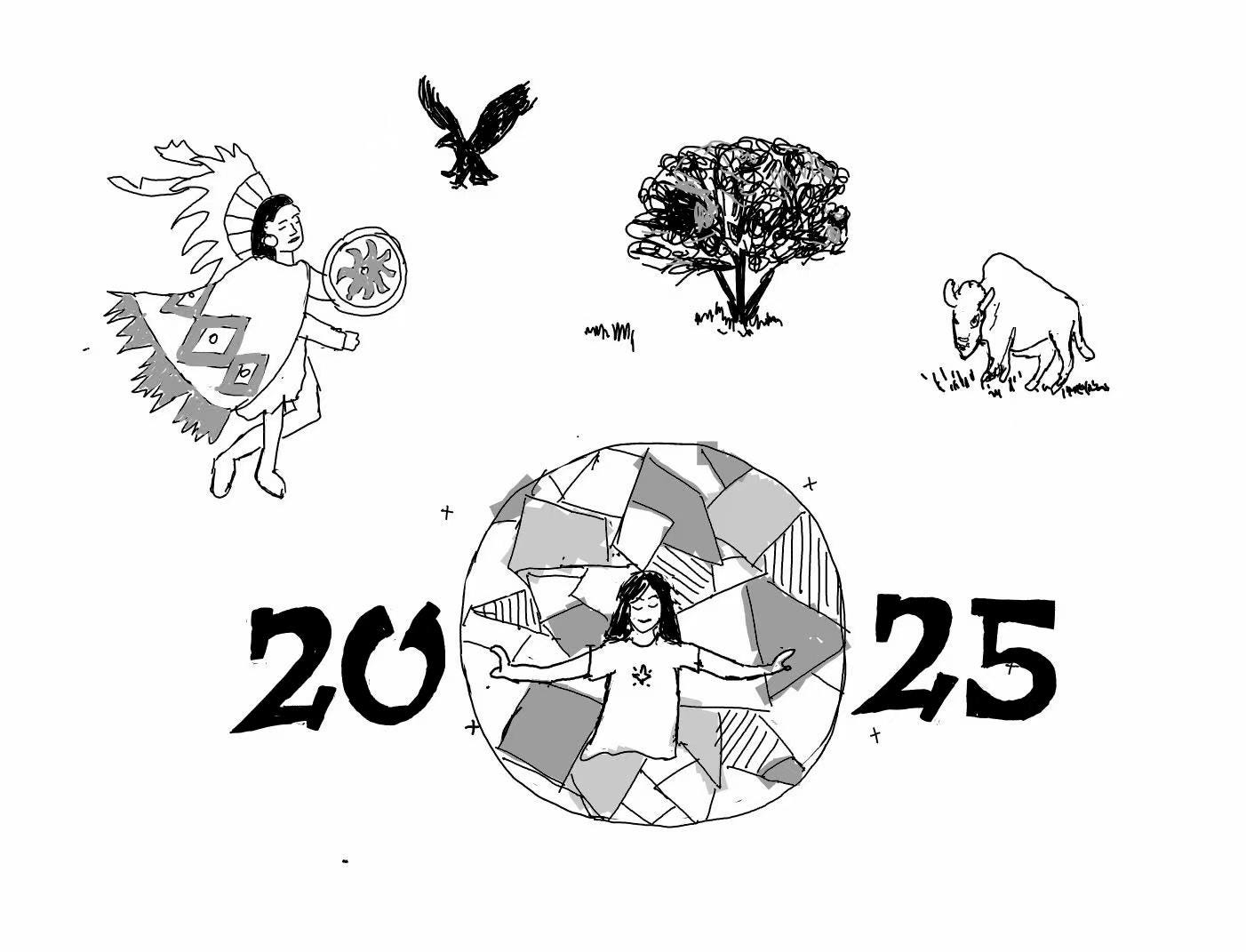
In fact, when the first Europeans arrived, they were stunned by what they saw. Millions of bison roamed the plains, rivers teemed with fish, and endless tall prairie grass rustled in the wind. Bald eagles once traced slow arcs across the blue sky—a bird so majestic it rose to sovereign symbol. Now it is seldom seen, its reign thinned by the loss of its home. Back then, food was naturally abundant so the natives didn’t have to toil and compete. But the Puritans were frightened by this idyllic picture. They knew only a civilization that compelled constant labor through scarcity, a system in which society could existed under strict discipline and control. Branding the natives as lazy and godless, the Puritans cleared forests, put fish to nets, hunted down the bison, and made it impossible to live without toil. To them, pain was salvation, work was worth, and punishment came from love.
What if things had been different? What if the Europeans had inherited this land alongside the native inhabitants, preserving its majestic, unspoiled beauty? What if we had learned that the land does not belong to us, but we belong to the land—as its stewards and caretakers, sharing its bounty with all species? What if in 2025, the newcomers arrived on those same shores, their bodies previously scarred by the voracious pillaging of nature, incessant and mindless economic enterprising, violent rivalry and oppression, to find a continent where animals, plants, and tribes flourish together, to discover humans have applied technology and wisdom to live gently and benevolently, and to witness the real “city upon hills,” shining light and love here and now, not only at the Sunday altar, but in economics, society, and human relations everywhere. What if the linear time regime of mechanical infinity, which emerged when energy use shifted from solar to stock sources, also shattered and dissipated like the end of a long dark spell? Chronology returns to its cyclical nature, where we, the children of countless generations before us, will descend into to earth in a slumber, having safeguarded this sacred planet for youngsters eager to gaze upon the sun.
This is the America that was not in year 2025—a project of what could have been, and whose time will come.
Donni,
Y certainly have done your homework. Very well written and thoughtful speculation on what might have been. Where will this skillful essay end up? Someplace with a large circulation I hope.
I wonder if there is a typology of essays? If there is, then this would be an archetype of the 'what if...' type of essays. -- And it would be a very interesting one...